Home / Articles
5 Signs You’re Ready for a Facelift Instead of Non-Surgical Treatments
Home / Articles
5 Signs You’re Ready for a Facelift Instead of Non-Surgical Treatments
Last updated date: 15-Oct-2025
There’s a quiet, unmistakable moment many people experience — often while looking in the mirror under morning light, or glancing at an old photograph — when they realize that non-surgical treatments aren’t creating the lift they once did.
To be honest, most patients don’t start their aesthetic journey thinking they’ll ever need a facelift. They begin with gentle treatments: a touch of filler for volume, a thread lift for support, or laser tightening to stimulate collagen. These work beautifully in the earlier stages of aging. But eventually, the deeper structures of the face — muscles, fat pads, and connective ligaments — begin to shift in ways that surface-level treatments can no longer correct.
At Gangnam Seoyon Plastic Surgery, we see this every week. A patient sits down, gently touches her jawline, and says, “Doctor, I’ve tried everything — but my face still looks tired.” That’s often the moment when we begin an honest discussion about whether it’s time to move from short-term maintenance to a more lasting, structural rejuvenation: a facelift.
When skin laxity becomes noticeable, many people turn to energy-based devices — Ultherapy, Thermage, or radiofrequency lifting — to encourage collagen regeneration. These can certainly help when elasticity is still strong, typically in one’s 30s to early 40s. But once sagging originates from the SMAS (Superficial Musculoaponeurotic System) layer, which lies beneath the skin and fat, no amount of surface tightening can truly reposition it.
The SMAS layer acts as the “scaffolding” of your face — it supports your cheeks, jawline, and nasolabial area. Over time, gravity, volume loss, and natural aging cause it to descend. While threads can mimic a small lift, they only hold for a limited time and don’t restore the true anatomical foundation.
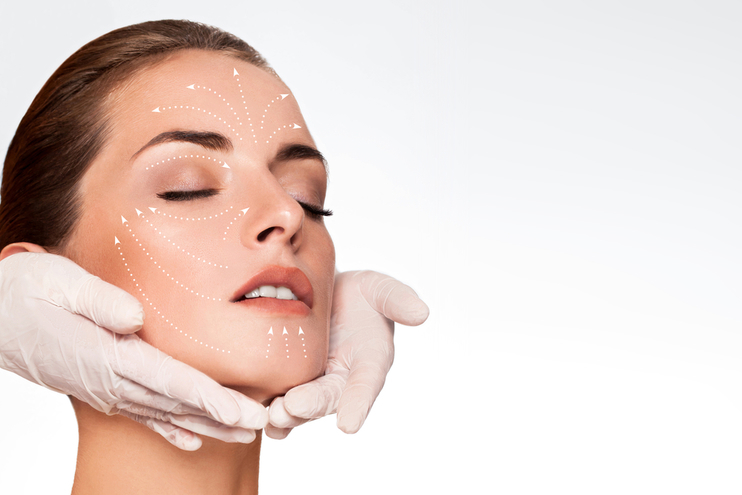
A facelift, on the other hand, targets this exact layer. It’s not simply about pulling skin tighter — it’s about restoring the SMAS and underlying fat pads to their youthful, natural position. When performed with artistry and care, the effect isn’t a frozen or “windblown” look, but rather a refreshed, harmonious version of yourself.
At Seoyon, Dr. Dong-il Choi’s approach to facelift surgery involves composite repositioning — carefully lifting both skin and SMAS as a single, integrated unit. This reduces tension on the skin surface, minimizes scarring, and extends longevity. Most importantly, it creates natural definition, especially around the jawline and midface — something non-surgical options simply cannot replicate.
“Think of it like fixing the building’s structure, not just repainting the walls.”
In Korea’s beauty culture, it’s common to see people maintain their appearance through regular laser sessions, fillers, and thread lifts. At first, these feel manageable — quick, relatively painless, and effective. But with time, this constant cycle of small corrections can become both emotionally tiring and financially draining.
Many patients express a subtle kind of exhaustion — what we call “maintenance fatigue.” They begin to feel like they’re chasing a moving target, trying to stay ahead of time rather than truly resetting it.
When treatments start feeling like a chore rather than self-care, it may be a sign you’re ready for something more definitive.
A facelift offers long-term peace of mind. Instead of continuous touch-ups, it provides a reset that lasts for years. It can actually make future non-surgical treatments more effective, because they’re applied to a well-lifted, stable foundation.
At Gangnam Seoyon, our patients often share how freeing it feels after surgery — not only because they look younger, but because they no longer feel compelled to “fix” their face every few months. The focus shifts from temporary improvement to sustained confidence.
This is one of the most common red flags that non-surgical methods have reached their limit. Over time, as the face loses structural support, even expertly placed fillers and threads can start to look heavy or unnatural.
Filler may migrate downward, making the cheeks appear puffy or uneven. Threads may cause surface irregularities or dimpling. Instead of restoring youthfulness, these treatments can unintentionally add volume in the wrong places, emphasizing sagging rather than lifting it.
We often see patients who have accumulated layers of past treatments — small amounts of filler in multiple areas that, over time, distort facial proportion. When this happens, surgery isn’t just about rejuvenation; it becomes an act of restoration.
During a facelift, unnecessary filler can be dissolved beforehand, and the deeper structures rebalanced. This allows your face to return to a more authentic, naturally contoured state.
“The goal isn’t to look different — it’s to look like yourself again, before time and treatments blurred the lines.”
At Seoyon, we take a conservative approach to filler and threads in older patients. Once structural sagging begins, we often recommend combining minor volume restoration with surgical repositioning, rather than layering more injectables onto weakened tissues.
A beautifully youthful face has clear transitions — from the cheeks to the jawline, from the jaw to the neck. When these boundaries begin to blur, non-surgical tightening can only do so much.
If you notice jowls forming, loose skin beneath your chin, or vertical neck banding, it’s likely that the platysma muscles and deeper connective tissues have lost tone. Surface devices like HIFU or laser can mildly firm skin, but they cannot remove excess tissue or reposition deep layers.
This is where a face and neck lift combination becomes transformative. At Seoyon, we perform what’s called a composite or extended facelift, addressing both areas simultaneously for seamless rejuvenation. Rather than lifting the face and leaving the neck untouched — which can create an age mismatch — we harmonize both to ensure a natural flow.
“A youthful face isn’t just smooth skin — it’s defined architecture.”
Dr. Choi’s meticulous technique minimizes visible scarring by concealing incisions along natural hairlines and creases. Patients often tell us that friends notice they look more “refreshed,” but can’t pinpoint why. That subtlety — that quiet elegance — is exactly what a well-executed facelift should achieve.
The most profound reason to consider a facelift often isn’t physical — it’s emotional. Many patients share that they still feel vibrant and full of life inside, but their reflection no longer reflects that energy.
Non-surgical options can soften small imperfections, but they rarely transform how someone feels about themselves in a lasting way. A facelift, when performed thoughtfully, can bridge that inner-outer gap — restoring harmony between self-perception and appearance.
At Gangnam Seoyon Plastic Surgery, our philosophy is built around this balance. We never aim for exaggeration or artificial perfection. Instead, we pursue refined naturalism — a face that looks rejuvenated, expressive, and true to its owner’s character.
Dr. Choi’s extensive background in revision surgery also means he approaches every facelift with restraint and precision. He understands the emotional burden of results that look “overdone.” His goal is to help patients regain confidence without losing their individuality.
“A successful facelift doesn’t make you look like someone else — it makes you recognize yourself again.”
A common question we hear is, “Am I too young for a facelift?” The truth is, there’s no fixed age. The right time depends on your skin quality, facial anatomy, and how you respond to non-surgical care.
Some people in their early 40s may already have deeper laxity, while others in their 50s maintain remarkable tone thanks to genetics and lifestyle. The key sign is when non-surgical options stop producing noticeable results — or start making things look less natural.
Interestingly, more patients are now opting for early or “mini” facelifts in Korea. These require smaller adjustments, minimal incisions, and shorter recovery. When performed under twilight or local anesthesia — a preferred method at Seoyon for suitable candidates — downtime is significantly reduced.
Starting earlier doesn’t mean you’re rushing into surgery. It often means you can achieve more subtle, preventive rejuvenation that maintains balance long-term, rather than waiting until the changes are more pronounced.
If you’re considering a facelift in Seoul or elsewhere in Korea, choosing the right surgeon is the most important decision you’ll make. The country is home to some of the most advanced aesthetic techniques in the world — but also a wide range of philosophies.
Here’s what to prioritize:
One-Doctor Policy: Ensure your surgeon — not an assistant or substitute — performs the operation from start to finish. At Seoyon, Dr. Choi personally conducts all consultations, surgeries, and follow-ups.
Revision Expertise: Surgeons experienced in revision procedures have a deeper understanding of tissue dynamics and healing patterns, which helps avoid unnatural tension or asymmetry.
Balanced Aesthetic Philosophy: True beauty lies in moderation. The goal is not to erase age, but to restore proportion and vitality.
A successful facelift should blend seamlessly into your natural features. Friends may notice you look well-rested, lighter, or happier — but not necessarily “different.” That’s the hallmark of surgical artistry.
If you’ve been feeling that your face no longer reflects your inner vitality — and non-surgical treatments no longer bring the satisfaction they once did — it may be time to explore a more lasting path.
At Gangnam Seoyon Plastic Surgery, we understand that deciding on a facelift is deeply personal. It’s not just a medical choice; it’s an emotional one. Our consultations are built around honesty and precision — evaluating your anatomy, your previous treatments, and your readiness, both physically and emotionally.
We believe surgery should never be rushed or pushed. It should be planned with care, supported by medical safety, and guided by an experienced surgeon who stays with you from start to finish.
If you’re unsure whether facelift surgery is right for you, consider visiting us for a second opinion or personalized assessment. Sometimes, even a detailed conversation with an expert can bring clarity and peace of mind.
Because in the end, aesthetic surgery isn’t about chasing youth — it’s about finding balance, confidence, and a reflection that finally feels like you again.
If you agree, anonymized data will be collected. You can change this choice at any time in your browser settings.