Home / Articles
Autologous Tissue Rhinoplasty: Why It’s the Gold Standard for Natural Results
Home / Articles
Autologous Tissue Rhinoplasty: Why It’s the Gold Standard for Natural Results
Last updated date: 19-Sep-2025
There’s a quiet truth in rhinoplasty that most patients only discover once they’ve started their research: the material used to shape your nose is just as important as the surgeon’s skill.
At Gangnam Seoyon Plastic Surgery, we’ve seen this unfold time and time again. Patients often arrive with concerns about implants shifting, visible edges under thin skin, or the “unnatural” look that can sometimes result from synthetic materials. These worries are not exaggerated — they’re real issues that can affect both the aesthetic outcome and long-term safety of nasal surgery.
That’s why, for those seeking the most natural, durable, and harmonious results, autologous tissue rhinoplasty has become the gold standard.
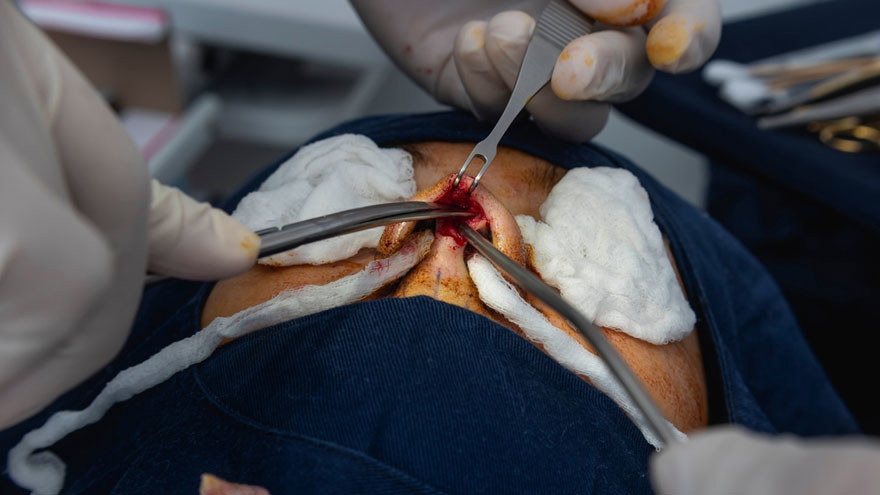
Simply put, “autologous” means using your own tissue. Instead of relying on silicone or Gore-Tex implants, autologous rhinoplasty uses cartilage and tissue harvested from areas such as:
Nasal septum (the central wall inside your nose)
Ear cartilage (soft, curved tissue ideal for fine shaping)
Rib cartilage (sturdy support when more volume is required)
This biological material is then sculpted and placed to refine the bridge, tip, or overall structure of the nose.
To a patient, the idea may sound more invasive at first. But when performed with precision, this approach provides a level of safety, biocompatibility, and natural beauty that synthetic implants simply can’t match.
It also aligns with a broader philosophy in modern plastic surgery: enhancing natural anatomy rather than forcing the face to adapt to artificial materials.
The body recognizes its own tissue — there’s no risk of rejection, foreign body reaction, or long-term complications like implant infection or extrusion.
To be honest, many patients don’t realize until they’ve lived with an implant how mentally taxing the fear of complications can be. Some become hyper-aware of their noses, worried that a small bump or accidental hit might cause their implant to shift. Using your own tissue takes away that constant worry, creating both physical and emotional relief.
A nose built with autologous tissue moves and ages with your face. Unlike stiff implants that can look “stuck on,” natural cartilage integrates with your skin and underlying structures. This integration creates a softer, more authentic result that blends seamlessly with your facial features.
For patients, this means being able to smile, laugh, or age gracefully without their nose looking “surgical.”
Silicone and Gore-Tex can shift, thin the skin, or become visible over time — especially in patients with thinner nasal tissue. These issues often appear years later, requiring corrective surgery.
Autologous cartilage, once healed, becomes a permanent part of your anatomy. It holds its shape while adapting naturally to your facial changes, offering lifelong stability.
Whether you need delicate refinement at the tip, structural reinforcement for revision surgery, or major reshaping due to trauma, autologous materials adapt to each situation.
Septal cartilage is ideal for precise structural grafting and dorsal support.
Ear cartilage is useful for subtle shaping, particularly in the nasal tip where a softer curve is desired.
Rib cartilage provides strong, abundant material for patients who require major reconstruction or have exhausted other donor sources.
This versatility is why autologous grafts are especially favored in complex or revision rhinoplasties.
It’s not just about safety and technique. For many patients, rhinoplasty is about restoring confidence.
Imagine someone who had an implant surgery years ago, only to notice the implant edge becoming visible under their skin. Every time they look in the mirror, they’re reminded not of their beauty, but of the surgery itself.
Revision with autologous tissue often brings more than a physical improvement — it allows the patient to finally “forget” about their nose and live naturally. That, in many ways, is the greatest gift surgery can offer.
At Seoyon, we often tell patients: “The goal of rhinoplasty is not to give you a new nose — it’s to give you peace of mind with the one you already have.”
In Korea, implants remain common for primary rhinoplasty. They’re quicker to insert, require less harvesting, and in some cases, allow for simpler procedures. Many clinics still recommend them because they shorten surgical time and can appear cost-effective in the short term.
But at Seoyon, we’ve seen too many revision cases where patients regret choosing synthetic materials. What seemed “easier” in the beginning often leads to bigger problems later — thinning skin, unnatural stiffness, and revision surgeries that could have been avoided.
One patient once told us, “I just wanted something simple, but I didn’t realize how much the implant would change my life — in ways I never wanted.” For her, an autologous revision was not only about aesthetics but about reclaiming control over her own body.
That’s why, especially for patients seeking natural, long-lasting results, we guide them toward autologous tissue from the very first consultation.
Autologous rhinoplasty is not a “one-size-fits-all” technique. It demands a surgeon who understands not only nasal anatomy but also how to harvest and sculpt cartilage with minimal scarring and maximum precision.
Poorly executed cartilage harvesting can leave visible ear deformities, chest scarring, or even weakened nasal structure. Skilled technique ensures that donor sites heal discreetly and functionally, while the nose receives exactly the support it needs.
Dr. Dong-il Choi, our chief surgeon, has over 20 years of experience in delicate revision and reconstructive surgeries. His philosophy is simple:
“The best surgery is the one that looks like it never happened.”
By adhering to the one-doctor policy — from consultation to surgery to follow-up — we ensure every patient receives consistent, individualized care. This is especially important in revision cases, where previous surgeries have already altered the nasal structure and healing dynamics.
Not all autologous tissue is the same. Patients often ask which donor site is “best.” The truth is, each type has its role:
Septal cartilage: Straight, strong, and located within the nose, making it the most convenient and commonly used. Often ideal for first-time rhinoplasty patients.
Ear cartilage: Softer and more curved, making it suitable for nasal tip refinement but less ideal for major structural support.
Rib cartilage: Provides the largest amount of material and strongest support, essential for difficult revisions or cases requiring significant augmentation.
The choice depends on your anatomy, surgical history, and goals. At Seoyon, we make this decision together with you during consultation, ensuring you understand why a certain option is recommended.
Recovery timelines vary, but patients are often surprised to find that using their own tissue does not significantly prolong healing compared to implant surgery.
Initial swelling and bruising: Similar to implant-based rhinoplasty, subsiding within 1–2 weeks.
Donor site healing: Small incisions behind the ear or on the chest (for rib cartilage) generally heal with minimal scarring. Septal cartilage harvesting is internal, leaving no visible mark.
Long-term results: Because the tissue is your own, the risk of late complications is dramatically reduced.
Patients often say the peace of mind they feel — knowing their nose is entirely “theirs” — outweighs the temporary discomfort of donor site healing.
Not every patient needs rib cartilage or extensive grafting. For many, septal or ear cartilage is sufficient. The decision depends on factors such as:
Whether it’s a primary or revision surgery
The strength and condition of your nasal skin and septum
How much structural support is required
Your personal goals for shape and proportion
The most important step is not choosing the material on your own, but consulting with a surgeon who prioritizes safety, honesty, and artistry.
If you’ve ever worried about your nose looking “done” or about the long-term risks of implants, you’re not alone. Many patients who walk through our doors share the same concerns.
Autologous tissue rhinoplasty is more than a technical choice — it’s a philosophy of natural beauty, safety, and lifelong confidence.
If you’re considering rhinoplasty, or if you’ve had a previous surgery and are seeking a safer revision, consider a consultation at a clinic that emphasizes surgical integrity and patient-first care. At Gangnam Seoyon Plastic Surgery, we believe every nose should tell only your story — not your surgeon’s.
If you agree, anonymized data will be collected. You can change this choice at any time in your browser settings.