Home / Articles
Forehead Lifting vs. Eyelid Surgery: Which One Do You Really Need?
Home / Articles
Forehead Lifting vs. Eyelid Surgery: Which One Do You Really Need?
Last updated date: 13-Sep-2025
Imagine this: you wake up one morning, glance in the mirror, and notice that your eyes don’t look quite the same as they did a few years ago. They seem heavier, smaller, or simply more tired. Many patients describe it as if their “light has dimmed.” The natural first thought is often, “I must need eyelid surgery.”
But here’s the surprising truth: what looks like drooping eyelids isn’t always the eyelid itself. In many cases, the forehead and brows are the hidden culprits, gradually sliding downward with age and pressing onto the eyes.
This leads to one of the most common questions we hear at Gangnam Seoyon Plastic Surgery:
“Do I need eyelid surgery, or would a forehead lift be better for me?”
The answer isn’t always obvious. Let’s walk through the differences — and more importantly, how to figure out which one will actually bring back the natural, refreshed look you’re hoping for.
To be honest, most patients don’t realize how interconnected the forehead and eyelids are. The upper face functions as one continuous unit, not isolated pieces. When the brows descend, they drag the upper eyelid skin downward. When eyelid skin becomes heavy, it can make the brows appear lower than they really are.
We often explain it using a simple analogy:
The forehead and brows are like the curtain rod.
The eyelids are the curtain itself.
If the rod tilts downward, the curtain will droop no matter how perfect the fabric is. Likewise, even if the curtain is replaced with new fabric, the rod’s sagging will still distort the overall look.
This explains why so many patients mistakenly believe they need one surgery when, in fact, the underlying problem lies elsewhere.
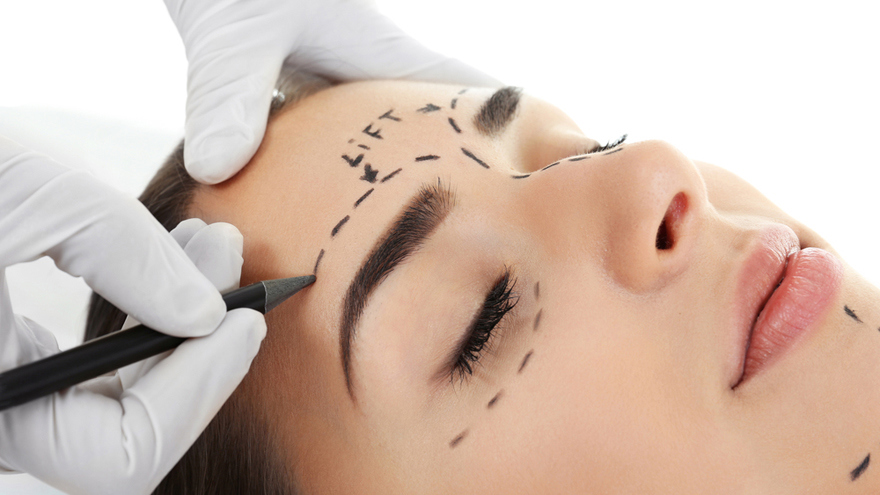
A forehead lift (also known as a brow lift) repositions the brows upward to where they naturally sat in youth. It’s not just about smoothing wrinkles — it’s about opening the eyes by reducing the constant downward pressure from heavy brows.
Key goals of forehead lifting:
Lifts low-set or drooping brows that cover the eyelids
Softens forehead creases, frown lines, and “angry” expressions
Restores a more approachable and refreshed look
Relieves tension for patients who habitually raise their brows to see better
Clinically, patients who benefit most from forehead lifting are those who say:
“My eyelids look heavy, but when I raise my brows, they suddenly look fine.”
“People often ask if I’m angry or tired when I’m not.”
“I constantly have to raise my eyebrows to open my eyes fully.”
Different surgical techniques exist, from endoscopic forehead lifting with minimal scars to coronal lifts for advanced cases. At Seoyon, the method is chosen carefully based on hairline, skin elasticity, and degree of sagging — because the goal isn’t to create a surprised look, but to gently restore balance.
Eyelid surgery directly targets the eyelid itself. Unlike forehead lifting, which repositions the brows, blepharoplasty addresses the skin, muscle, and fat of the upper eyelid.
Key goals of eyelid surgery:
Removes redundant or sagging skin that droops over the lash line
Adjusts or refines the eyelid crease for natural definition
Reduces puffiness caused by excess fat pads
Restores a brighter, less aged appearance
Patients who benefit most from eyelid surgery usually say things like:
“I have extra skin that folds over my eyelid.”
“My eyelid crease disappeared as I got older.”
“My eyelids feel heavy and make my eyes look smaller.”
In Asian patients, where double eyelid shape plays a major role in facial harmony, blepharoplasty can be a delicate blend of functional improvement and aesthetic design. At Seoyon, the emphasis is always on natural results — avoiding the overly deep or artificial crease that can make surgery look obvious.
Here’s a simple at-home test:
Stand in front of a mirror in natural light.
Use two fingers to gently lift your eyebrows upward.
Observe what happens to your eyelids.
If lifting the brows makes the eyelids look instantly lighter and more open, the main issue is forehead/brow sagging.
If the eyelids still look heavy even when the brows are elevated, the problem lies in the eyelid skin itself.
Of course, this isn’t foolproof. Many patients need both forehead and eyelid correction for the best outcome. In our clinic, we often see patients with low brows and stretched eyelid skin — a dual effect that cannot be solved with just one procedure.
This is why professional diagnosis is so important. A skilled surgeon examines the brow position, skin elasticity, muscle activity, and overall facial balance before recommending a plan.
Here in Seoul — where cosmetic surgery is highly advanced — we frequently meet patients who had eyelid surgery elsewhere, only to discover afterward that their tired look remained. Why? Because their brows were pressing down the whole time.
The reverse also happens: patients undergo a forehead lift but still feel their eyes are puffy, because the real issue was excess eyelid skin.
The emotional toll of this misdiagnosis is real. Patients often feel they “wasted” their first surgery, or worse, that their face looks unnatural. Revision surgery becomes necessary — something we specialize in at Seoyon.
That’s why Dr. Dong-il Choi’s approach is conservative and diagnostic-first. He carefully evaluates not just the eyes, but the entire upper face. And because of our one-doctor policy, the surgeon who consults you is the same one who operates — ensuring nothing gets lost between diagnosis and surgery.
In Korea, beauty is about balance and natural harmony. Patients don’t usually want a dramatic “surgical look” — they want to look refreshed, approachable, and naturally youthful.
This is why the distinction between forehead lifting and eyelid surgery is critical:
A forehead lift done too aggressively can create an unnatural, startled look.
Eyelid surgery done without addressing brow heaviness can make eyes look even smaller.
At Seoyon, we often describe the process like tuning an instrument. The brows, eyelids, and forehead must all be in harmony. Adjusting one string too tightly throws the whole instrument out of tune.
Sometimes, the most natural results come from combining both procedures:
A gentle forehead lift to reposition the brows
A refined eyelid surgery to remove excess skin and redefine the crease
Together, these create openness and balance without looking artificial. Patients are often surprised that the result looks less surgical than when only one procedure is done.
Think of it like restoring a painting: sometimes the frame (the brows) and the canvas (the eyelids) both need attention to reveal the artwork’s original beauty.
Surgery isn’t just technical — it’s emotional. Many patients who come to us for revision tell us about the hidden burden they carried after their first operation.
They avoided photos, felt misunderstood at work, or even hesitated to meet friends. For them, revision wasn’t just about “fixing a crease” — it was about reclaiming confidence in their natural expression.
This is why we emphasize patient-first care. At Seoyon, we don’t rush decisions. We listen to how you feel, what you’ve been through, and what you hope to see in the mirror again. Surgery is not just about anatomy — it’s about identity.
The truth is, there’s no universal answer. Some patients need only eyelid surgery. Others need only a forehead lift. Many need a combination. And each plan must be tailored not just to anatomy, but to lifestyle, cultural preferences, and personal goals.
If you’ve been wondering which one you need, the best step is to consult a clinic where the surgeon evaluates the whole upper face — not just one isolated feature.
At Gangnam Seoyon Plastic Surgery, our goal is not to push a specific surgery, but to guide you toward what will restore the most natural and harmonious result.
If you’re standing at the crossroads of eyelid surgery and forehead lifting, remember this: the right choice depends on a precise understanding of where the heaviness truly comes from. Online research and mirror tests can give you clues, but a professional diagnosis is essential.
Most importantly, choose a clinic where the surgeon is responsible for you from start to finish. That’s how you ensure the surgery isn’t just technically correct, but emotionally fulfilling.
Because at the end of the day, it’s not about creating “bigger eyes” or “higher brows.” It’s about restoring a face that feels authentically yours — one where your expression finally matches the energy you feel inside.
If you agree, anonymized data will be collected. You can change this choice at any time in your browser settings.