Home / Articles
How Safe Is Thread Lifting Compared to Surgery?
Home / Articles
How Safe Is Thread Lifting Compared to Surgery?
Last updated date: 31-Oct-2025
A Doctor’s Perspective from Gangnam Seoyon Plastic Surgery, Seoul
If you’ve been considering facial rejuvenation, you’ve probably come across the term “thread lifting.” Often described as a “lunchtime lift,” this non-surgical procedure promises instant lift, minimal downtime, and natural-looking results — all without the incisions or recovery of surgery.
But behind the marketing gloss, many patients ask an honest question:
“Is thread lifting really safe — especially compared to surgical lifting?”
At Gangnam Seoyon Plastic Surgery, we see both sides of this question every day. Some patients come to us after trying threads and feeling disappointed by short-lived results. Others want a subtle enhancement without committing to surgery. The truth is, safety depends less on the method itself and more on the patient’s anatomy, expectations, and the surgeon’s judgment.
Let’s look at this topic through a clear, experience-based lens.
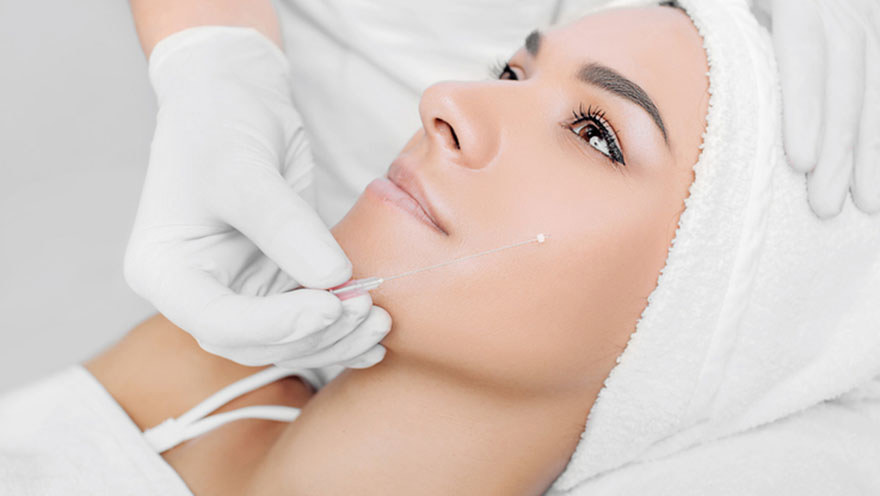
Thread lifting uses dissolvable medical sutures (often made of PDO, PLLA, or PCL) inserted beneath the skin to mechanically lift sagging tissue and stimulate collagen production as they dissolve.
It’s quick — usually 30 to 60 minutes — and typically done under local anesthesia. Most people return to normal life within a few days, with only mild swelling or bruising.
In Korea, thread lifting is incredibly popular, especially among those in their 30s and 40s who notice early skin laxity around the cheeks, jawline, or nasolabial folds.
However, what’s often not discussed enough is how different it is from a surgical lift, not just in process, but in the depth of correction and safety considerations.
Both thread lifting and surgical lifting (like facelift or mini-lift procedures) are designed to counteract aging, but they do so in very different ways.
Factor | Thread Lift | Surgical Lift |
|---|---|---|
Anesthesia | Local | General or sedation |
Downtime | 2–5 days | 2–4 weeks |
Longevity | 6–18 months | 7–10 years |
Depth of correction | Skin and superficial fat | Deep tissue (SMAS layer) |
Complication risk | Mild (bruising, asymmetry, dimpling) | Moderate (hematoma, scarring, nerve injury) |
At first glance, thread lifts seem much safer — no scalpel, no general anesthesia, no long recovery. But that doesn’t automatically mean risk-free.
To be honest, many people underestimate the risks of thread lifting simply because it’s marketed as “non-surgical.” In reality, it’s still a medical procedure that pierces tissue and manipulates facial structures.
At Gangnam Seoyon, we often see patients who experienced the following issues elsewhere:
Thread migration or extrusion: Threads that shift position or poke through the skin due to poor placement or thin tissue.
Asymmetry or dimpling: Uneven pull or tension from threads placed too superficially.
Infection or inflammation: Especially if done in non-sterile settings.
Over-tightening: Creating unnatural facial expressions or stiffness.
While most complications are temporary or correctable, they still carry emotional weight. Some patients come in saying, “It was supposed to be simple, but I ended up feeling worse about my face.”
The irony is that what was meant to be a “light” lift can occasionally lead to secondary correction procedures — or even revision surgery.
Surgical lifting — whether a facelift, mini-lift, or thread-assisted SMAS lift — involves deeper tissue manipulation. Because it’s more invasive, the risks are naturally higher: bleeding, nerve injury, or scarring.
However, under the hands of an experienced surgeon, these risks are very low, and the results are far more predictable and long-lasting.
At Seoyon, Dr. Dong-il Choi emphasizes the principle of “stable correction.”
Rather than chasing quick fixes, he carefully adjusts the facial layer (SMAS) to restore natural contours. The goal is not to pull tighter, but to lift anatomically — in the same direction your facial structure once held itself.
That’s why for patients in their 40s or 50s with moderate sagging, a surgical lift (even a mini one) is often safer in the long run than repeating multiple thread lifts every year.
A key question we ask during consultation is:
“What kind of support structure does your face still have?”
If your skin still has elasticity and minimal volume loss, threads may work beautifully for 1–2 years.
If there’s significant sagging, volume descent, or weakened fascia, threads may not hold — they’ll either shift or dissolve without meaningful lift.
Trying to force threads to correct deep sagging can actually lead to more trauma — multiple insertions, over-tensioned threads, and uneven pull.
That’s where surgical lifting becomes not only more effective, but also safer for long-term tissue health.
In Korea’s competitive beauty market, thread lifting has become a “fast-service” trend. Unfortunately, this sometimes means non-specialists or unlicensed operators performing procedures after minimal training.
At Seoyon, we stress the “one-doctor policy.”
Every patient is treated directly by Dr. Choi — from consultation to thread insertion to aftercare. That consistency ensures not just precision, but accountability.
He often reminds patients:
“A safe lift is not about the thread brand or the technique name. It’s about how well your tissue responds — and that can only be judged in person.”
When done properly, thread lifting can be a gentle and effective bridge between skincare and surgery. When done poorly, it can lead to months of swelling or asymmetry that could have been avoided with honest guidance.
Here’s how we generally guide patients:
Choose Thread Lifting if:
You’re in your 30s–40s with mild sagging
You want a quick, subtle enhancement
You accept results lasting 1–1.5 years
You’re prepared to maintain it regularly
Choose Surgical Lifting if:
You have moderate to severe sagging
You want stable results lasting several years
You’re ready for downtime but want true rejuvenation
You want long-term safety and anatomical correction
Both paths can be safe — as long as your choice aligns with your facial condition and your surgeon’s honest assessment.
If you’ve been scrolling through before-and-after photos, trying to decide whether to “just try threads” or “commit to surgery,” remember this:
It’s not a race toward tighter skin — it’s about restoring confidence safely and naturally.
Whether that means a small lift with threads or a comprehensive revision procedure, the safest option is always one made with full understanding, realistic expectations, and a doctor who values your long-term results over short-term trends.
At Gangnam Seoyon Plastic Surgery, we believe in precision, honesty, and individualized care — because every face tells a story, and every lift should honor it.
If you’re weighing your options between thread lifting and surgery, consider booking a personalized consultation with Dr. Dong-il Choi at Gangnam Seoyon Plastic Surgery in Seoul.
You’ll receive an honest evaluation — not a sales pitch — and leave knowing which approach truly fits your anatomy, lifestyle, and safety needs.
If you agree, anonymized data will be collected. You can change this choice at any time in your browser settings.