Home / Articles
Shurink Treatment: How Many Sessions Do You Really Need?
Home / Articles
Shurink Treatment: How Many Sessions Do You Really Need?
Last updated date: 15-Oct-2025
In Seoul, where aesthetic technology evolves faster than skincare trends, Shurink has become a household name. Often described as a “non-surgical facelift,” it promises tighter, firmer skin — no scalpel, no downtime.
But one question keeps coming up during consultations at Gangnam Seoyon Plastic Surgery:
“How many Shurink sessions do I really need to see a result?”
It’s a fair question — and an important one. Because while Shurink can deliver impressive tightening and contouring, its effectiveness depends on more than just the number of times you do it.
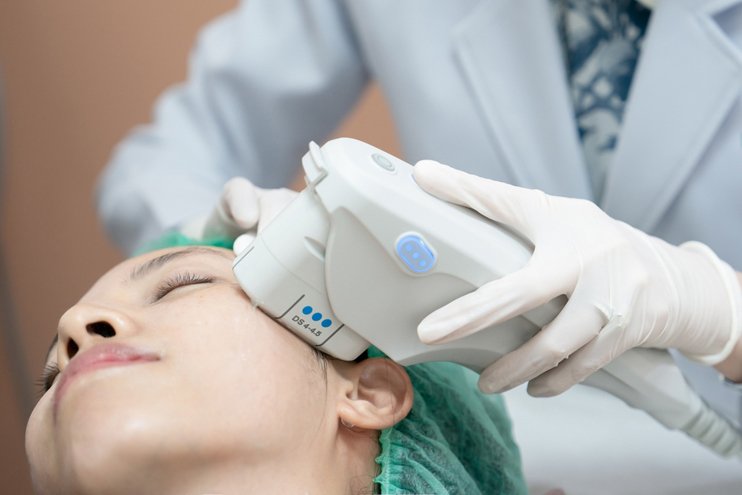
Shurink (슈링크) is Korea’s signature ultrasound lifting treatment, using High-Intensity Focused Ultrasound (HIFU) to deliver energy deep beneath the skin — specifically to the SMAS layer, the same foundational tissue that surgeons target in facelift procedures.
By stimulating controlled heat injury at precise depths, Shurink triggers collagen regeneration and skin tightening over the next several weeks.
Think of it like re-tuning the “support structure” of your face: instead of stretching the skin from the outside, Shurink strengthens what holds it up from within.
Many clinics advertise “one Shurink session for lifting” — and while technically true, that’s only part of the story.
Here’s what most patients don’t realize at first:
One session can create visible improvement, especially for mild skin laxity or maintenance after previous lifting procedures.
But collagen regeneration is a biological process. It continues gradually over 2–3 months, then slows down again — meaning results plateau unless the stimulation is renewed.
So, rather than thinking “How many times should I go?” — a better question is:
“How can I maintain continuous collagen stimulation for lasting firmness?”
At Gangnam Seoyon Plastic Surgery, Dr. Dong-il Choi customizes Shurink schedules based on each patient’s skin elasticity, age, and treatment history.
Here’s how it generally breaks down:
Goal: Prevention, mild tightening, jawline definition.
Recommended: 1 initial session, followed by 1 maintenance session every 6–8 months.
Why: Younger skin still produces collagen efficiently, so less frequent treatments can sustain results.
Goal: Firming sagging cheeks, lifting jowls, reducing nasolabial folds.
Recommended: 2–3 sessions per year, spaced 4–6 months apart.
Why: Collagen production slows with age; consistent stimulation ensures cumulative lifting and texture improvement.
Goal: Post-surgery refinement or contour balancing.
Recommended: Case-by-case. Some patients benefit from a Shurink session 3–6 months after eyelid, facelift, or fat graft procedures to maintain firmness as swelling subsides.
To be honest, the number of Shurink sessions isn’t a one-size-fits-all answer.
What truly determines your plan are three personal factors:
Skin Thickness and Elasticity – Thicker skin often requires stronger or more frequent treatments to see visible lift.
Facial Volume Changes – Patients with fat loss or hollowness may benefit from combining Shurink with volumizing treatments like fillers or fat grafts.
Lifestyle Factors – Smoking, sun exposure, and stress accelerate collagen breakdown — shortening the longevity of results.
At Seoyon, our approach is simple: never overtreat, never overpromise. We only recommend sessions that your skin can genuinely benefit from.
Most patients start to notice subtle tightening after 2–4 weeks, with peak lifting around 2–3 months post-treatment — once new collagen fully matures.
This delayed effect can surprise first-timers:
“It didn’t look different right away, but my jawline started looking firmer after a month.”
That’s exactly how Shurink is meant to work — naturally, gradually, and without abrupt facial changes.
At Seoyon, we often describe it as “aging in reverse, quietly.”
Although Shurink is non-surgical, it’s not a “push-button” procedure. The accuracy of depth targeting and shot mapping determines whether energy reaches the SMAS layer evenly — or misses it entirely.
Dr. Choi emphasizes that every patient’s facial anatomy and fat distribution differ slightly.
A careless operator may deliver too much energy in thin areas (causing hollowness or discomfort) or too little in thicker zones (leading to no visible result).
That’s why at Gangnam Seoyon Plastic Surgery, Shurink is always performed under a one-doctor policy — ensuring precision, consistency, and optimal safety.
Patients often ask: “Is Shurink different from Ultherapy?”
Yes — and no. Both are HIFU technologies, but Shurink’s advantage lies in adjustability and Korean-specific calibration.
Developed for Asian skin types, it offers:
Multiple cartridges (1.5mm–4.5mm) for tailored depth control.
Lower pain levels compared to earlier HIFU devices.
Custom energy settings that balance comfort with efficacy.
In Korea, Shurink is often used more frequently but with gentler intensity, creating a layered lifting effect that feels natural, not frozen.
For patients seeking comprehensive anti-aging, Shurink can be integrated into multi-modal facial rejuvenation plans:
With Dermal Fillers – to restore volume after tightening.
With Laser Toning or Rejuran – for texture, pores, and elasticity.
With Botox – to refine expression lines and lift synergy zones (like the jawline or corners of the mouth).
At Seoyon, we believe the most beautiful results come from balance — not intensity. Every face has its own “rhythm,” and treatments should enhance, not overpower it.
You’ll know it’s time for your next Shurink when:
Your skin starts to feel softer or less firm again.
Makeup begins to settle differently (especially around the cheeks or jawline).
You miss the subtle lift you saw a few months after your last session.
Typically, this happens around 6–8 months for most patients. Regular maintenance prevents sudden sagging and keeps collagen regeneration consistent.
“Shurink is not about chasing perfection. It’s about preserving your best version for as long as possible — safely, naturally, and without overdoing it.”
He reminds every patient that real lifting doesn’t come from intensity, but from precision and timing.
Even a powerful device like Shurink must be guided by careful medical judgment — understanding not just where to treat, but when to pause.
If you’re considering Shurink, remember:
One session can start the process.
Consistency sustains it.
Skilled technique defines it.
Whether you’re in your 20s preventing early laxity or in your 50s seeking gentle rejuvenation, Shurink can be a beautiful, non-surgical path toward firmer, more confident skin — when done thoughtfully.
If you’re still unsure how many sessions you may need, you can always book a consultation at Gangnam Seoyon Plastic Surgery in Gangnam, Seoul.
Our team will assess your facial structure, collagen quality, and personal goals — and recommend a plan that’s truly yours.
Because at Seoyon, it’s never about how many sessions you do.
It’s about how naturally — and gracefully — you feel yourself again.
If you agree, anonymized data will be collected. You can change this choice at any time in your browser settings.