Home / Articles
Signs Your Nose Job Needs a Revision: What Patients Should Watch For
Home / Articles
Signs Your Nose Job Needs a Revision: What Patients Should Watch For
Last updated date: 25-Sep-2025
For many patients, rhinoplasty is one of the most transformative procedures they will ever choose. A successful nose job can harmonize the face, refine features, and improve both confidence and breathing. But the reality is that not every surgery leads to the desired outcome. In some cases, the results fall short — whether due to surgical technique, healing response, or simply a mismatch between expectations and outcome. When this happens, revision rhinoplasty may become necessary.
At Gangnam Seoyon Plastic Surgery in Seoul, we often meet patients who come to us after a first or even second nose surgery, carrying not only physical concerns but also emotional weight. Some are frustrated that their breathing is worse after surgery. Others feel that their nose looks artificial or out of balance. Many are hesitant, unsure if another surgery will truly help or only make things worse. If you’ve ever felt the same, you are not alone.
This article explains the key signs that your nose job may require revision — blending medical insight with real patient experiences. The goal is to help you recognize what’s normal during recovery, what’s a red flag, and when it might be time to seek expert help.
Immediately after rhinoplasty, it is normal to see swelling, bruising, stiffness, and temporary irregularities. Even small asymmetries are common in the early months. To be realistic, no nose looks “final” right after surgery. It typically takes 6–12 months — sometimes longer for thick-skinned patients — before the nose fully matures into its permanent form.
That’s why patience is critical. Many patients worry at the three-month mark when they see uneven swelling, but often this resolves naturally with time. However, if more than a year has passed and the shape, symmetry, or breathing function still feels problematic, then the issue is unlikely to self-correct.
At Seoyon, we emphasize follow-up care because early recognition is key. Some problems can be managed conservatively, while others may benefit from planned revision. The point is not to panic, but to understand the difference between normal healing and signs of a lasting problem.
One of the most important — and often overlooked — goals of rhinoplasty is preserving or improving nasal function. If you notice it is harder to breathe through one or both nostrils after surgery, this could indicate that internal structures were compromised.
Common causes include:
Collapsed nasal valves (the narrowest part of the airway)
Over-resection of cartilage, making the nose structurally weak
Septal deviation that was left untreated or recurred after healing
Breathing issues can dramatically affect quality of life — from constant stuffiness to sleep disturbances. Revision surgery can rebuild support using cartilage grafts and restore a more functional airway.
A small degree of asymmetry exists in every human face and nose, even without surgery. But if your nose looks crooked, twisted, or uneven months after rhinoplasty, this may suggest structural imbalance.
Patients often describe this as:
A bridge that “leans” to one side
A tip that points in an unintended direction
Uneven nostrils
True asymmetry rarely improves with time. Revision rhinoplasty may involve straightening the septum, repositioning cartilage, or using grafts to restore balance.
This is one of the most common emotional concerns. To be honest, many patients don’t necessarily have a “bad” result — they just feel their new nose doesn’t look like them.
Signs of an unnatural result include:
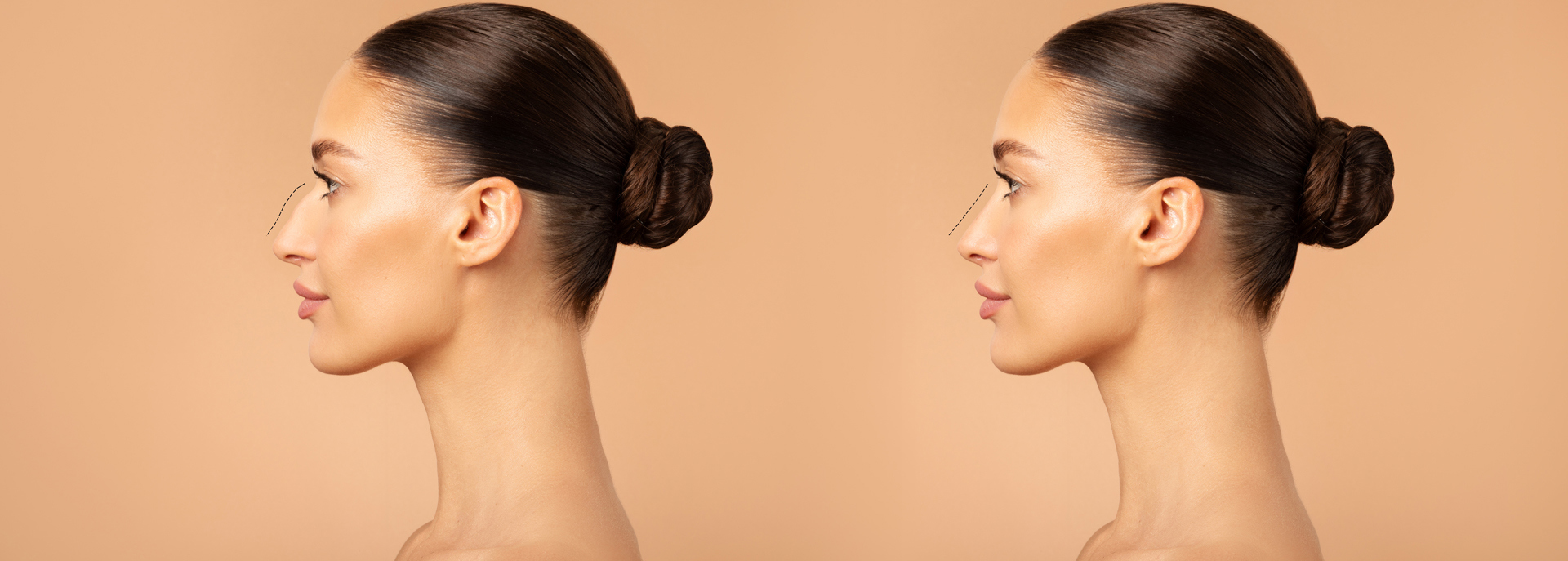
An overly scooped or “ski-slope” bridge
A pinched or overly narrow tip
Excessive rotation of the tip (nose turned upward unnaturally)
Over-reduction of the bridge leading to a flat profile
At Seoyon, we believe rhinoplasty should refine natural features, not replace them with something artificial. A well-done nose should look like it belongs to your face — as if you were born with it.
The nose is not just a cosmetic feature; it is a delicate framework of cartilage, bone, and skin. If too much support is removed or if healing weakens the structure, the nose can collapse.
Common examples include:
Saddle nose deformity (a visible dip in the bridge)
Tip drooping that worsens with time
Nasal walls caving inward when breathing
These issues often require structural grafting during revision. At Seoyon, we frequently use cartilage from the septum, ear, or rib to rebuild lost support and restore both form and function.
While most rhinoplasty scars are hidden and heal well, in rare cases patients develop visible external scars or irregularities under the skin. Examples include:
Raised scar tissue around the columella (the strip between the nostrils)
Palpable bumps or ridges under the bridge skin
Skin thinning from over-resection of cartilage
Scar revision techniques, steroid injections, or surgical refinement can address these concerns during a secondary procedure.
Not every reason for revision is purely medical. Sometimes, the biggest sign comes from within: you simply don’t feel comfortable with your new appearance.
For example:
You avoid taking profile photos
You constantly compare your nose to others
You feel your nose doesn’t match your personality
This kind of emotional distress is significant. Aesthetic surgery should enhance your sense of self, not create new insecurities. In these cases, revision rhinoplasty is not about “fixing a mistake” but about restoring confidence and harmony.
Revision rhinoplasty is often described as reconstructing a painting rather than starting fresh on a blank canvas. There are unique challenges that make it more delicate than primary rhinoplasty:
Scar tissue makes dissection more difficult
Weakened cartilage provides less support
Limited septal cartilage may require grafts from the ear or rib
Unpredictable healing due to previous surgery
This is why experience matters. Revision should always be performed by a surgeon with extensive knowledge of both primary and secondary rhinoplasty. At Gangnam Seoyon Plastic Surgery, Dr. Dong-il Choi brings over 20 years of surgical expertise, with a special focus on complex revision cases. His philosophy is to balance aesthetics with function while minimizing unnecessary trauma to already-healed tissue.
One of the most common questions patients ask is: “How soon can I have a revision?”
The general guideline is to wait at least 6–12 months after your first surgery. This allows swelling to resolve and scar tissue to soften, making surgical results more predictable. Attempting revision too early can lead to further complications.
That said, there are exceptions. In cases of:
Severe nasal collapse
Significant breathing impairment
Visible deformities that worsen over time
…early intervention may be recommended. At Seoyon, we provide individualized guidance. Sometimes reassurance and continued healing is the best advice; other times, timely revision prevents long-term damage.
If you recognize one or more of these signs, it doesn’t necessarily mean your first surgery was a complete failure. Many patients achieve excellent results with revision once they find the right surgeon.
When considering next steps:
Seek an honest consultation: A good surgeon will tell you if revision is truly necessary — or if your concerns may improve with time.
Look for transparency: Beware of clinics that overpromise. Revision is complex, and realistic expectations are key.
Prioritize safety and function: A beautiful nose that doesn’t breathe properly is not a success.
At Gangnam Seoyon Plastic Surgery, we operate with a strict one-doctor policy — meaning Dr. Choi personally handles every consultation, surgery, and follow-up. There are no ghost surgeons. Our team includes anesthesiology and family medicine specialists to ensure safety and holistic care from start to finish.
Revision rhinoplasty is not simply about “fixing” a nose. It is about restoring balance, function, and peace of mind. If your first rhinoplasty left you with breathing difficulties, asymmetry, or a sense that your nose no longer belongs to you, revision may be the answer.
At Gangnam Seoyon Plastic Surgery, we’ve witnessed how powerful this second chance can be. With precise technique, careful planning, and an emphasis on natural results, revision surgery can help patients move beyond disappointment and finally achieve the harmony they deserve.
If you agree, anonymized data will be collected. You can change this choice at any time in your browser settings.