Home / Articles
SMAS Facelift vs. Mini Facelift: Which One Suits You?
Home / Articles
SMAS Facelift vs. Mini Facelift: Which One Suits You?
Last updated date: 15-Oct-2025
Most people considering facial rejuvenation share the same quiet wish — to look refreshed, not different. Yet when researching facelift options, terms like “SMAS facelift” and “mini facelift” can feel confusing. Both sound promising, but they involve very different levels of correction, downtime, and longevity.
At Gangnam Seoyon Plastic Surgery, where we specialize in natural anti-aging and facial contouring, we often meet patients who are unsure which approach will best suit their age, anatomy, and goals. Some only need subtle lifting around the jawline, while others seek a deeper transformation that restores structure beneath the skin.
Let’s explore how the SMAS facelift and mini facelift truly differ — not just in surgical technique, but in purpose, recovery, and the kind of result you can expect.
Before comparing the two, it helps to understand what “SMAS” means.
SMAS stands for Superficial Musculoaponeurotic System — a thin layer of fibrous tissue and muscle beneath the facial skin. It acts like a suspension network, connecting the facial muscles to the skin and supporting overall facial tone.
When we age, both the skin and the SMAS layer lose elasticity. Gravity pulls the cheeks downward, the jawline softens, and nasolabial folds deepen. Simply tightening the surface skin can’t fix this — it often leads to the “stretched” or unnatural look people fear.
A true facelift must lift both the skin and the SMAS together, restoring the deeper foundation that holds facial shape. This is where the difference between an SMAS facelift and a mini facelift begins.
A SMAS facelift is a comprehensive, deep-plane procedure that repositions the deeper muscle and connective tissue layers of the face — not just the skin.
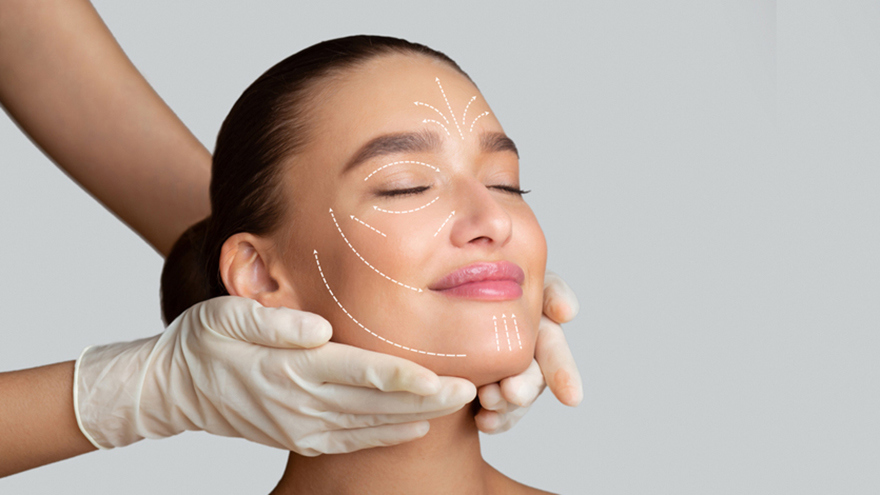
During a SMAS facelift, the surgeon gently lifts the skin to access the SMAS layer beneath. The SMAS is then tightened, folded, or repositioned according to each patient’s unique anatomy. By adjusting this deep support layer, the face is rejuvenated from within. The skin is then re-draped naturally, without tension.
Midface sagging (cheeks, nasolabial folds)
Jowls and jawline
Lower face and upper neck laxity
Those typically in their 40s to 60s, or even older, who have moderate to severe skin laxity and deeper sagging of facial structures.
More comprehensive lifting — corrects both deep and surface layers
Longer-lasting results (often 8–12 years)
Natural finish — no “pulled” or “windblown” look when done precisely
The procedure involves a longer recovery period (2–4 weeks) than lighter facelifts, since deeper tissues are adjusted. However, in skilled hands, swelling subsides predictably and scars fade discreetly around the ear line and hairline.
To be honest, most patients who undergo a SMAS facelift tell us later that they wish they hadn’t waited so long. It doesn’t make you look different — it simply brings back the version of yourself you remember.
A mini facelift — sometimes called a short-scar facelift — is a less invasive version designed for mild to moderate sagging, particularly along the jawline and lower face.
Instead of lifting the full SMAS layer, a mini facelift involves limited incisions (often just around the ears) and partial tightening of the superficial layers. It focuses on improving early jowling and skin laxity without fully repositioning deeper facial structures.
Mild jowls
Early loss of jawline definition
Light sagging near the corners of the mouth
Usually in their late 30s to early 50s, or those who want subtle rejuvenation but aren’t ready for a full SMAS procedure. It’s also common for patients who’ve had previous facelifts and want a small “refresh” years later.
Shorter recovery time (often 5–10 days)
Smaller incisions and less swelling
Good for earlier aging or maintenance
Because it targets only surface-level tissues, results may not last as long (typically 3–5 years), and it cannot address deeper sagging or heavy neck bands.
Feature | SMAS Facelift | Mini Facelift |
|---|---|---|
Depth of lift | Deep (SMAS and skin layers) | Superficial (mainly skin) |
Target areas | Midface, lower face, jawline, neck | Jawline and mild lower face |
Ideal age range | 40s–60s+ | 30s–50s |
Recovery time | 2–4 weeks | 5–10 days |
Longevity | 8–12 years | 3–5 years |
Result | Comprehensive, structural | Subtle, maintenance-type |
Anesthesia | General or deep sedation | Local or light sedation |
Scarring | Hidden around ears/hairline | Minimal, near ears only |
At Gangnam Seoyon, we don’t believe one technique is “better” than the other — only that each must match the patient’s needs, anatomy, and expectations. A mini facelift can be life-changing for someone in their 40s who just wants to look fresher. But for deeper sagging, a SMAS lift offers the only way to truly rebuild youthful structure.
Chronological age matters less than tissue laxity. Some patients in their 50s only need a mini facelift, while others in their 40s benefit more from SMAS-level correction — especially if they’ve lost significant facial volume or have heavy jowls.
At our clinic, we often use 3D imaging and elasticity analysis to evaluate how deeply your facial tissues have descended. This allows us to plan a lift that’s both safe and effective without overcorrection.
If you can afford 2–3 weeks of downtime, a SMAS lift offers lasting structure and rejuvenation. But if you need to return to work quickly or prefer a lighter touch, a mini lift may be ideal — especially when combined with non-surgical skin tightening or fat grafting.
A mini facelift can be a wonderful early intervention, but if deeper aging continues, you may later choose a SMAS lift for longer-lasting correction. Many of our patients follow this exact journey — beginning with subtle maintenance procedures in their 40s and moving to structural lifting later on.
Even a “mini” facelift demands precision. Poorly executed mini lifts may pull only the skin, leading to tension, asymmetry, or visible scars. The artistry lies in how naturally the tissues are repositioned. That’s why we emphasize the “one-doctor policy” — ensuring that the same surgeon who consults you is the one who performs your surgery.
At Gangnam Seoyon Plastic Surgery, our approach to facelift surgery is deeply personal.
We don’t believe in chasing youth through tightness — we believe in restoring balance and light to the face. A successful facelift doesn’t draw attention; it simply allows people to see you again, not your tiredness or tension.
Dr. Dong-il Choi, our Chief Director, has over 20 years of experience in facial contouring and revision surgery. His philosophy is clear:
“Lifting surgery should never erase your character. It should refine what time has changed — carefully, safely, and harmoniously.”
This philosophy is especially crucial for revision cases or patients who have had unsatisfactory results elsewhere. Over-tightening or uneven SMAS manipulation can lead to asymmetry, nerve irritation, or an unnatural smile. Through meticulous dissection and preservation of key ligaments, we focus on maintaining facial movement and softness, even after deep lifting.
While the SMAS or mini facelift addresses sagging, facial aging is multi-dimensional. Skin texture, volume loss, and elasticity all play roles. That’s why we often combine facelift surgery with complementary treatments for holistic rejuvenation, such as:
Fat grafting or filler refinement to restore lost volume
Laser or RF therapy for skin tightening and texture
Neck tightening to harmonize the jawline with the lower face
Thread lifting as a maintenance tool post-surgery
By treating the face as a whole, we can achieve results that feel both youthful and believable — not piecemeal or overdone.
“Will I look like a different person?”
No. A properly executed facelift — especially a SMAS lift — repositions your existing structures. You’ll look refreshed, not “operated on.”
“Is the scar visible?”
Incisions are hidden along the natural ear contour and hairline. Over time, they fade almost invisibly with proper post-op care.
“When can I go out in public again?”
For a mini facelift, usually within 1 week. For a SMAS facelift, most patients resume normal activities within 2–3 weeks, with full refinement over 2–3 months.
“How long do results last?”
SMAS lifts typically maintain structure for 8–12 years, while mini lifts last 3–5 years. However, results depend on skin quality, lifestyle, and sun exposure.
Facelift surgery isn’t just physical — it’s deeply emotional. Many patients tell us they waited years, often out of fear of “looking fake.”
But the truth is, natural rejuvenation is absolutely achievable when the surgery respects your anatomy and individuality.
At Seoyon, we see each patient not as a case but as a story in progress — someone reclaiming confidence after years of hesitation. That’s why we take time during consultation to listen, not just diagnose. Every decision, from incision design to vector of lift, is made with long-term harmony and safety in mind.
If you’re uncertain which facelift suits you — or if you’ve had prior facial surgery and are considering revision — a second opinion can be invaluable. In Korea, where aesthetic standards are exceptionally high, revision cases often require early intervention to prevent scar contracture or tissue hardening.
We often see international patients who’ve had facelifts overseas and feel that their results aged too quickly or appear asymmetric. In these cases, understanding the previous surgical plane and tension pattern is essential before attempting correction.
If this sounds familiar, please know that revision is possible — but it should only be handled by a surgeon with deep familiarity in facial layer anatomy and revision safety, such as at Gangnam Seoyon.
You may prefer a Mini Facelift if: | You may prefer a SMAS Facelift if: |
|---|---|
You have mild sagging or early jowls | You have deeper folds, heavy jowls, or neck laxity |
You’re in your 30s–50s | You’re in your 40s–60s or beyond |
You want quick recovery and subtle improvement | You want comprehensive, structural rejuvenation |
You prefer minimal anesthesia | You’re comfortable with a longer recovery for long-term results |
A youthful face isn’t one without lines — it’s one with harmony, light, and vitality. Whether through a mini or SMAS facelift, the goal is not to erase age, but to align your outer appearance with your inner energy.
If you’re considering facial rejuvenation but feel unsure about the right approach, we invite you to schedule an honest consultation at Gangnam Seoyon Plastic Surgery in Seoul. Our team will assess your facial structure, skin quality, and goals to recommend the most natural, safest path forward — one that feels uniquely you.
Because in the end, true beauty doesn’t come from transformation — it comes from restoration done with care.
If you agree, anonymized data will be collected. You can change this choice at any time in your browser settings.