Home / Articles
Ulthera After 40: Is It Enough to Lift Sagging Skin?
Home / Articles
Ulthera After 40: Is It Enough to Lift Sagging Skin?
Last updated date: 15-Oct-2025
When patients in their 40s visit Gangnam Seoyon Plastic Surgery, one of the most common questions we hear is:
“Doctor, can Ulthera really lift my skin — or do I already need surgery?”
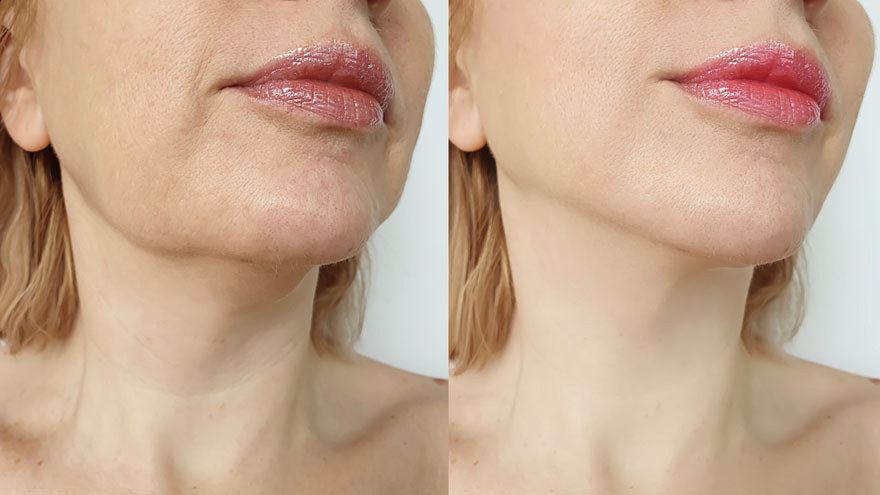
It’s a question that reveals both curiosity and quiet hesitation. By this age, most people begin noticing that their skin no longer bounces back like it used to. Subtle jowls form along the jawline, the cheeks seem a little heavier, and the mirror reflects fatigue even on well-rested mornings.
The 40s mark a delicate turning point in facial aging — when collagen loss accelerates, gravity gains the upper hand, and the contours of youth begin to soften. Many seek non-surgical solutions that can help them stay youthful without going under the knife.
Ulthera, or Ultherapy, often becomes the first consideration. But is it really enough to lift sagging skin after 40 — or is it simply delaying the inevitable? Let’s explore this with both science and honesty.
Ulthera isn’t a laser or filler — it’s an advanced micro-focused ultrasound treatment that targets the SMAS (Superficial Musculoaponeurotic System) layer — the same deep structure that plastic surgeons tighten during a surgical facelift.
Here’s what makes it unique:
It delivers precisely controlled ultrasound energy into the skin’s deeper layers without damaging the surface.
The heat generated at 1.5mm, 3.0mm, and 4.5mm depths triggers neocollagenesis — your body’s natural process of producing new collagen fibers.
Over 2–3 months, this leads to gradual lifting, tightening, and improved skin firmness.
At Gangnam Seoyon Plastic Surgery, we often describe Ulthera as a non-surgical architectural reinforcement. Instead of replacing volume or cutting tissue, it helps your skin rebuild its own inner scaffolding.
However, the effectiveness of Ulthera depends largely on the patient’s age, collagen quality, and the degree of sagging — which is why results can vary widely between someone in their 30s and someone in their late 40s.
In your 20s and 30s, collagen and elastin fibers are abundant and spring-like. The skin is firm, hydrated, and capable of rapid repair. When energy-based treatments like Ulthera are applied, the tissue responds robustly, producing new collagen efficiently.
After 40, however, several structural and biological shifts occur simultaneously:
Collagen loss accelerates by up to 1% per year, and existing fibers become fragmented and less elastic.
Facial fat pads descend, particularly around the midface and jawline.
Bone resorption — especially in the eye socket and jaw — subtly alters facial support.
The SMAS layer loosens, making sagging more apparent along the jaw, neck, and cheeks.
Skin hydration and barrier function decline, slowing healing and elasticity.
This is why a treatment that gave a visible lift in one’s early 30s might seem underwhelming after 45.
To be frank, most patients initially hope Ulthera can act as a “mini-facelift in a machine.” The truth is more nuanced. Ulthera can lift and tighten — but only if the skin still retains sufficient structural integrity to respond.
Ulthera produces its best results in patients with mild to moderate skin laxity — typically those who are just beginning to notice early sagging or a “tired” appearance.
Ideal candidates include individuals who:
Notice subtle jowls or loss of jawline definition
Experience slight drooping around the cheeks, eyebrows, or neck
Want a natural, gradual improvement without scars or downtime
Have good baseline skin elasticity
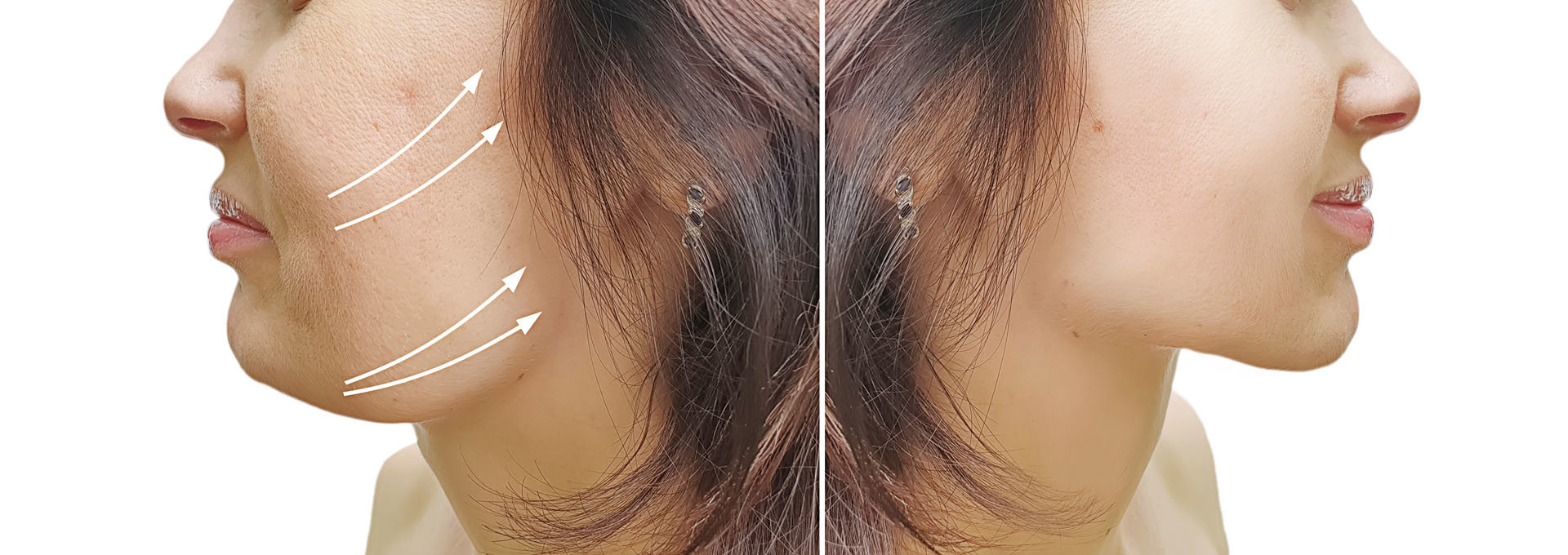
For these patients, Ulthera can visibly refine facial contours, elevate the brow line, and smooth the area under the chin. The improvement develops gradually, usually reaching its peak around three to six months post-treatment, and results can last up to a year or more.
At Seoyon, we find that patients who view Ulthera as part of an ongoing skin health and aging management plan — rather than a one-time miracle — are the most satisfied. They understand that collagen stimulation is cumulative, and periodic treatments help maintain and reinforce their skin’s natural lift over time.
Ulthera excels at tightening — but not at replacing lost volume or repositioning fat and muscle. After 40, the skin’s sagging often results from a combination of loosened connective tissue and volume depletion.
Here’s a simple analogy: imagine a tent whose fabric has stretched and whose poles have shifted. Heating the fabric (skin tightening) won’t restore shape unless the poles (facial volume) are repositioned or replaced.
That’s why, for some patients, Ulthera alone may not deliver the dramatic “lift” they envision.
You may need a combination approach if you experience:
Deep nasolabial folds that persist even when lifting the skin manually
Pronounced jowls or a softened jawline
Sagging in the neck area with visible platysmal bands
Hollow temples or flattened midface volume
In such cases, a comprehensive lifting plan may include:
Dermal fillers or fat grafting to restore structure
Thread lifting to provide mechanical repositioning
RF microneedling or laser resurfacing to improve surface tone and texture
Botulinum toxin to relax downward-pulling muscles
At Gangnam Seoyon Plastic Surgery, we often combine Ulthera with these modalities to treat the skin at multiple levels — from deep tissue tightening to surface refinement — ensuring a balanced, natural outcome.
The biggest decision patients face is whether to continue with non-invasive options or transition to surgical correction.
To clarify:
Ulthera works best as a preventive and maintenance treatment.
Surgical lifting (such as facelift or mini-lift) is a corrective procedure for more advanced sagging.
At 40–45, many patients fall in the “gray zone.” They’re not quite ready for surgery but want stronger results than skincare can provide. Ulthera fills that gap beautifully. It enhances firmness, sharpens contours, and helps maintain youthful structure without anesthesia or downtime.
However, when laxity becomes severe — when skin hangs rather than droops — surgery remains the only way to reposition deeper structures and remove excess tissue. The choice depends on the patient’s anatomy, lifestyle, and comfort level.
Interestingly, even after facelift surgery, many patients continue periodic Ulthera treatments as maintenance therapy. It helps prolong surgical results by stimulating ongoing collagen regeneration and preventing re-sagging.
Many people assume that Ulthera is a “plug-and-play” device — that anyone can perform it with similar outcomes. In truth, the operator’s skill determines 80% of the result.
Each face has unique variations in fat thickness, SMAS depth, and nerve location. Delivering energy too superficially may only heat the skin, while going too deep risks inefficiency or discomfort.
At Gangnam Seoyon Plastic Surgery, our clinicians tailor every Ulthera session based on:
Ultrasound imaging of the target layers
Customized shot patterns to accommodate facial asymmetry
Adjusted energy intensity for different zones (forehead, jawline, neck)
Pre-treatment collagen assessment using high-resolution skin analysis
This level of customization ensures both safety and efficacy. It’s also why Seoyon patients often describe their results as “refreshed but natural” — never stiff, swollen, or overdone.
As Dr. Dong-il Choi often explains,
“A good lifting treatment shouldn’t change your expression — it should restore your natural contour, as if the years simply softened their grip.”
For many patients in their 40s, aesthetic treatments are less about vanity and more about self-recognition.
“I just want to look the way I feel inside,” one patient shared recently.
This sentiment is common — especially among professionals or parents who suddenly feel their outer reflection no longer matches their energy. Small changes, like a firmer jawline or lifted brow, can profoundly affect confidence, career presence, and even interpersonal relationships.
At Seoyon, we view Ulthera not just as a technical procedure, but as an emotional restoration tool — one that helps patients reconnect with a version of themselves they still identify with.
Every Ulthera session at Seoyon begins with a detailed facial analysis. Our doctors examine skin elasticity, thickness, fat distribution, and facial balance before mapping out the treatment plan.
We utilize 3D imaging and ultrasound visualization to pinpoint precise depths for energy delivery. This ensures each pulse of ultrasound reaches the optimal layer for collagen stimulation — and avoids unnecessary surface heating or discomfort.
For patients over 40, we often recommend integrated lifting programs, combining Ulthera with treatments such as:
Thread lifting for enhanced structural support
Exosome or PRP therapy for improved healing and collagen synthesis
Hydration-based boosters (e.g., Rejuran, Skin Botos) to restore suppleness
Light-based toning for surface glow
This multi-layered approach rejuvenates not just the skin’s tightness but its texture, radiance, and overall vitality — achieving harmony between firmness and softness.
The most honest answer is: sometimes yes, sometimes not alone.
Ulthera can meaningfully lift and tighten if your skin still retains good elasticity and your goals are natural refinement, not dramatic transformation. But for advanced sagging, it works best as part of a combined rejuvenation plan.
Think of Ulthera as a foundation for graceful aging — one that supports your collagen health, preserves youthful contours, and delays the need for surgery.
Patients who invest in consistent maintenance (once every 12–18 months) often experience a slower and gentler aging process, maintaining facial balance well into their 50s.
If your goal is to look refreshed, rested, and naturally confident — Ulthera remains one of the safest, most scientifically proven solutions available today.
At Gangnam Seoyon Plastic Surgery, we believe that beauty after 40 isn’t about chasing youth — it’s about curating confidence with intention and care.
Dr. Dong-il Choi, our Chief Director with over two decades of surgical expertise, emphasizes this in every consultation:
“Aging gracefully isn’t about reversing time. It’s about harmonizing your inner vitality with your outer reflection — safely, honestly, and naturally.”
If you’re in your 40s and wondering whether Ulthera is right for you, consider visiting Seoyon for a personalized lifting assessment. We’ll evaluate your collagen condition, discuss realistic expectations, and design a plan that aligns with your goals — whether that’s Ulthera alone or a combined rejuvenation strategy.
Because at Seoyon, your face isn’t a canvas for trends — it’s a reflection of your story.
And every story deserves to age beautifully.
If you agree, anonymized data will be collected. You can change this choice at any time in your browser settings.